Discs at Work Across South Africa
The Right Disc for Every Job and Material
Explore how cutting, grinding, sanding and polishing discs help tackle workshop repairs, factory production and demanding construction work.
Built for Real Working Conditions
Where Abrasive Discs Make a Difference
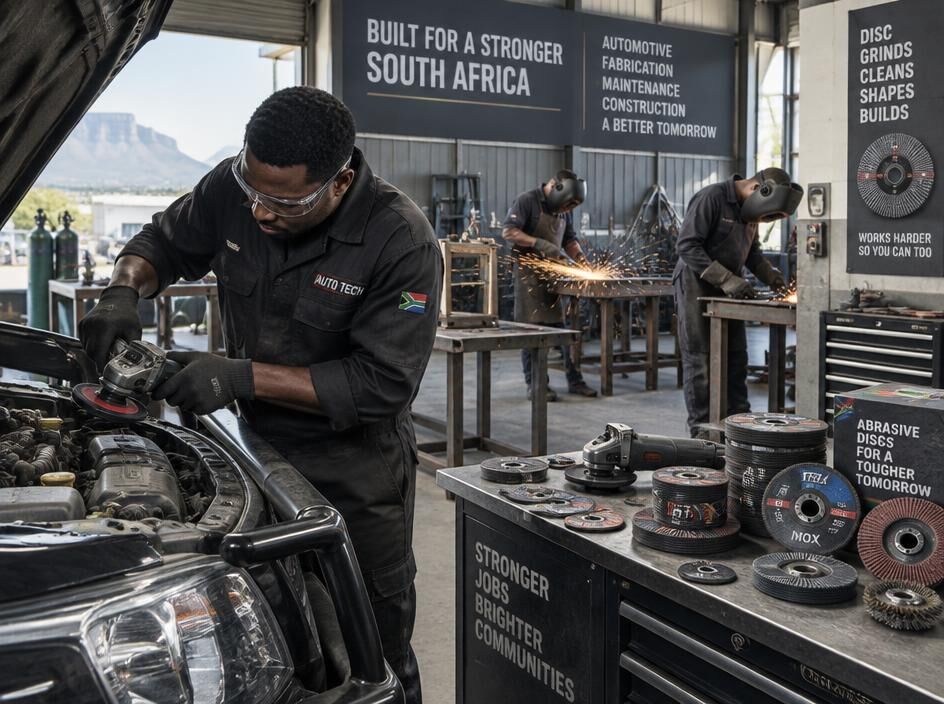
Automotive Repair
Cut exhaust components, remove welds and prepare body panels for refinishing with discs suited to tight spaces and controlled surface work.
Manufacturing & Fabrication
Shape metal parts, clean weld seams and finish repeat-production components with discs selected for consistent results and material compatibility.
Metalworking Workshops
Cut steel stock, grind rough edges and blend joints using discs matched to the metal, tool speed and finish required.
Construction & Site Work
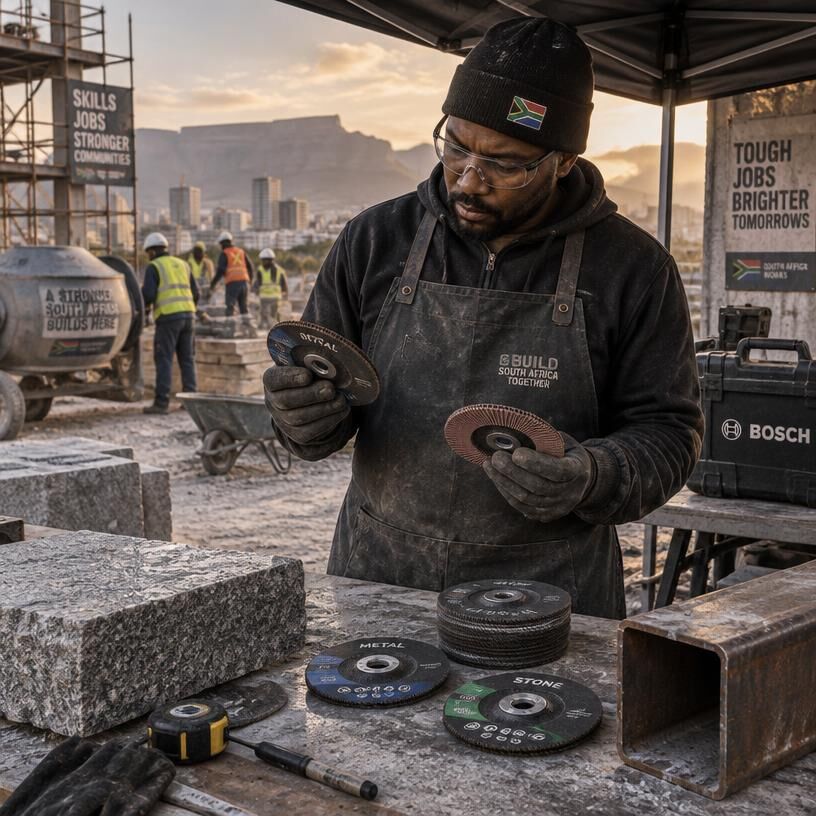
Cut masonry, tile and metal fittings on site with discs chosen for the substrate, power tool and dusty working conditions.
Find a Disc by Task and Finish
Cutting Discs — Clean Cuts in Metal
Grinding Discs — Stock and Weld Removal
Flap Discs — Blending and Smoothing
Sanding Discs — Surface Preparation
Polishing Discs — Refined Finishes
Diamond Blades — Masonry and Tile Cuts
Fibre Discs — Heavy-Duty Metal Sanding
Wire Discs — Rust and Coating Removal
Choose the Disc for the Task
From automotive bodywork to construction sites and metal fabrication, the right disc depends on the material, the finish required and whether the task calls for removal or refinement.
01
Cutting Discs for Clean Separation
02
Grinding Discs for Stock Removal
03
Sanding Discs for Shaping and Smoothing
04
Polishing and Preparation Discs for Finishing
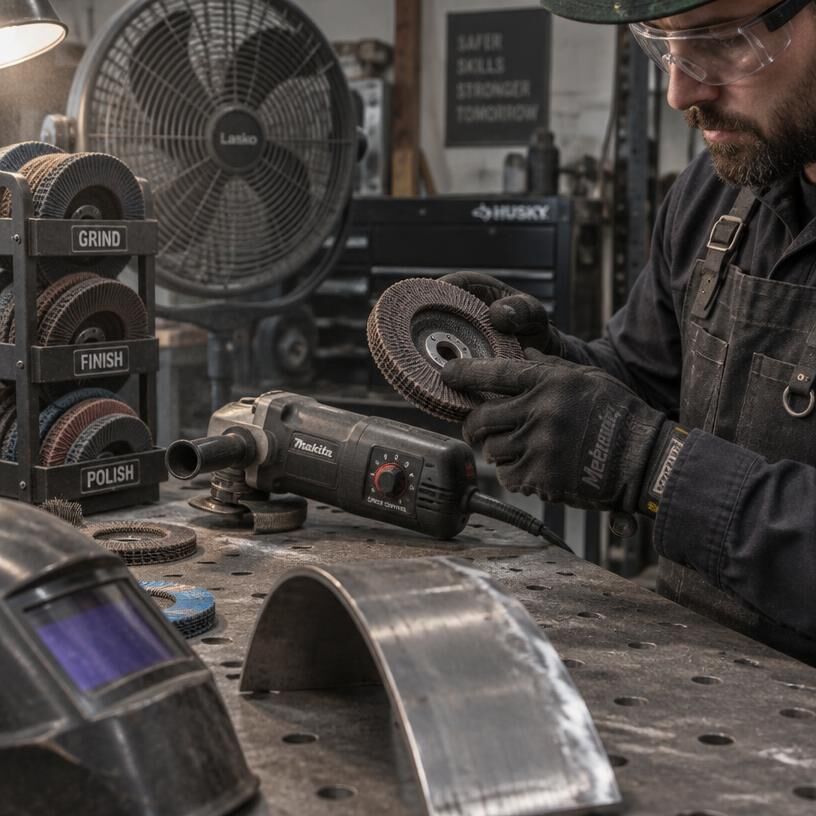
Start With the Material and Shape
Steel, stainless steel, masonry and painted vehicle panels call for different disc materials and abrasives. A flat plate may suit a conventional grinding disc, while curves, edges and tight spaces can require a more flexible format. Match the disc to the task as well: cutting discs separate material, grinding discs remove heavier stock, sanding discs smooth repairs, and polishing or surface-preparation discs refine the finish.
Account for Real Working Conditions
Check that the disc’s rated speed meets or exceeds the tool’s maximum operating speed. Heat can damage sensitive finishes, while dust, moisture and outdoor jobsite conditions affect visibility, grip and disc performance. In automotive repair, manufacturing and construction, choosing the right disc means considering both the workpiece and the conditions around it.
Disc Safety Essentials
Match Disc Diameter to the Tool
Check the Maximum Rated Speed
Use the Correct Arbor Size
Fit the Required Guard
Inspect for Cracks or Damage
Mount Discs as Instructed
Keep Cutting Discs Out of Side-Grinding Work
Wear Impact-Rated Eye Protection
Add a Face Shield Where Needed
Protect Hearing From Tool Noise
Use Suitable Respiratory Protection
Wear Appropriate Gloves
Secure the Workpiece Firmly
Keep Bystanders Clear of Sparks
Check for Flammable Materials
Maintain a Stable Working Position
Let the Tool Reach Operating Speed
Stop and Replace Worn Discs
Match the Disc to the Job
How to Choose the Right Disc
1
Define the Task and Material
Start with the job—cutting, grinding, sanding or finishing—and identify the workpiece, whether it is steel, aluminium, masonry or another material.
2
Check the Tool and Conditions
Match the disc size, mounting and speed rating to your tool. Consider site conditions, including confined spaces, heavy-duty use and whether the work is wet or dry.
3
Choose the Required Finish
Decide how much material to remove and what surface quality you need, then compare disc types suited to your application and working conditions.
Find Discs for Your Industry
Explore disc categories and South African suppliers for automotive repair, manufacturing, metalworking and construction. Find options suited to your tools, materials and applications.